

Choosing the right feeding bottle can feel like navigating a maze blindfolded. With so many options out there, it’s easy to get lost in a sea of plastic and silicone. But fear not! This guide will help parents sift through the clutter and find the perfect bottle that meets their little one’s needs—and maybe even their own sanity.
Overview of Feeding Bottle Options
Choosing a feeding bottle involves several options tailored to different needs. Parents encounter materials such as glass, plastic, and silicone. Each type offers unique benefits and challenges.
Glass bottles provide durability and do not leach chemicals. Many parents prefer glass for its ease of cleaning and sterilization. Plastic bottles, on the other hand, offer lightweight convenience, making them ideal for travel. Brands often create BPA-free plastics to enhance safety.
Silicone bottles feature flexible designs and are less prone to breaking. These models cater to babies who prefer a softer feel during feeding. Additionally, some feeding bottles come with adjustable flow nipples, allowing customization based on the child’s feeding pace.
Shape also plays a vital role in bottle selection. Some parents opt for wide-neck bottles for easier filling and cleaning. Others choose angled bottles, which help babies latch better and reduce air intake. Familiarizing oneself with the variety of nipple shapes, such as orthodontic or standard, can improve feeding.
Compatibility with breast pumps matters for breastfeeding mothers. Many brands design bottles that attach directly to pumps, streamlining the transition between pumping and feeding. Some parents find specialized bottles with anti-colic features to be invaluable for reducing gas.
Lastly, ease of cleaning cannot be overlooked. Bottles with fewer parts simplify maintenance. Choosing bottles compatible with dishwashers may save time and energy.
These options reflect diverse preferences and requirements, allowing parents to find the perfect fit for their child.
Types of Feeding Bottles
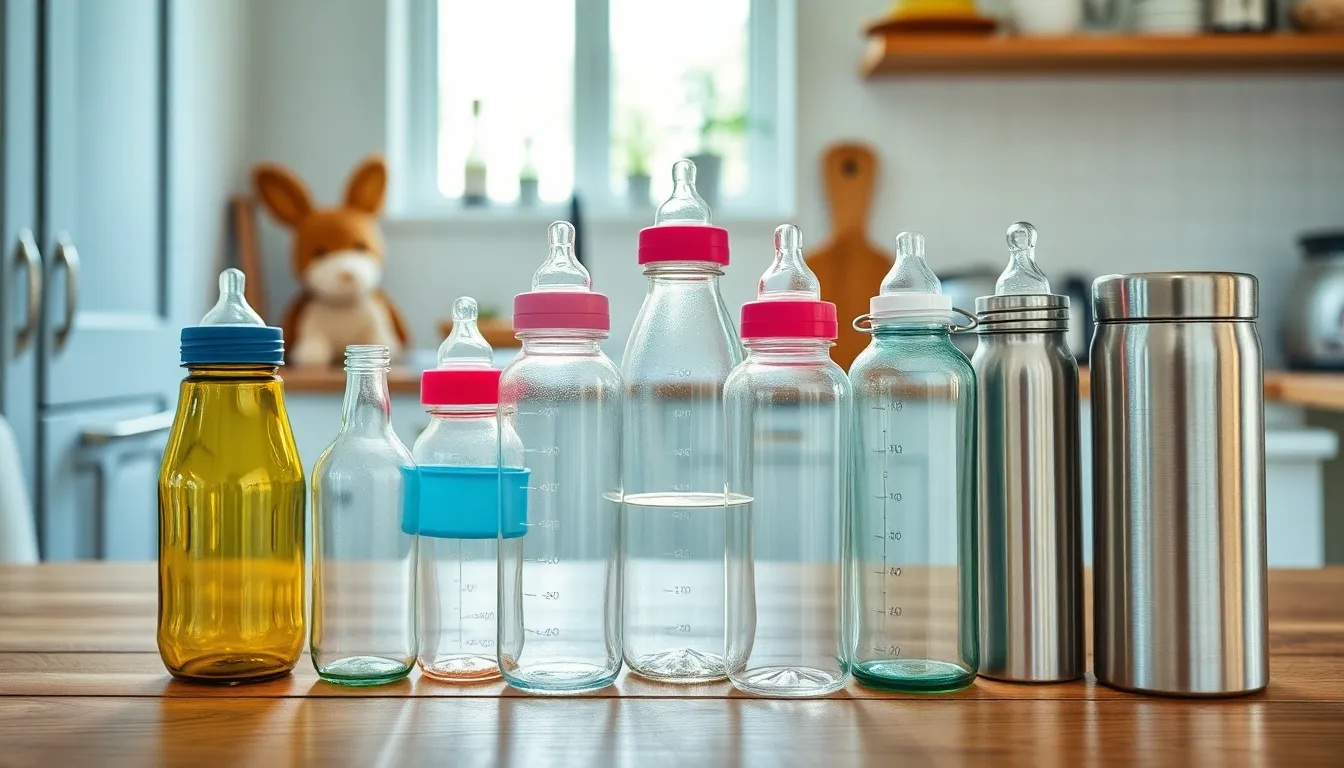
Feeding bottles come in various types, each designed to meet specific needs. Understanding these options helps parents choose the right bottle for their child.
Plastic Feeding Bottles
Plastic feeding bottles are lightweight and shatterproof, making them ideal for on-the-go use. Many options are BPA-free, ensuring safety for infants. These bottles often come in vibrant colors and designs, appealing to both parents and children. Ease of cleaning stands out as a significant advantage, often featuring fewer parts. Some plastic bottles are compatible with breast pumps, enhancing their versatility.
Glass Feeding Bottles
Glass feeding bottles offer durability and an easy-to-clean surface. Many parents appreciate their resistance to staining and odor retention. Often, these bottles feature silicone sleeves for added protection against breaks. These options provide a healthier alternative compared to some plastics since they don’t leach chemicals. Wide-mouth designs help with filling and cleaning, making them convenient.
Stainless Steel Feeding Bottles
Stainless steel feeding bottles provide an insulated option, keeping liquids warm or cold for longer periods. Often, these bottles feature a lightweight and durable design. Safety is another advantage, as they are free from BPA and other harmful chemicals. Some models come with a wide-opening, allowing for easy filling and cleaning. Parents appreciate the eco-friendliness of stainless steel, as they are reusable and recyclable.
Features to Consider
Factors influencing the selection of feeding bottles include nipple shape, bottle size, and ease of cleaning.
Nipple Shape and Material
Nipple shape affects a baby’s latch. Some prefer wide nipples, as they mimic the breast. Others may benefit from standard shapes. Material also plays a role; silicone nipples are soft and flexible, while latex nipples provide a natural feel. Different flow rates impact feeding speed too, allowing parents to choose based on their baby’s age and feeding style. Testing multiple options can help find what works best.
Bottle Size and Capacity
Bottle size corresponds with a baby’s feeding habits. Smaller bottles, typically 4 to 6 ounces, suit newborns. As babies grow, larger bottles—8 to 10 ounces—become more practical. Matching the bottle capacity to feeding frequency is also important. Parents should consider the convenience of feeding on the go, making larger bottles a better choice for outings.
Ease of Cleaning
Cleaning ease is crucial for maintaining bottle hygiene. Bottles with fewer parts streamline the cleaning process. Parents tend to prefer wide-neck designs, as they allow for easy access during scrubbing. Materials matter; glass and stainless steel bottles often feature smoother surfaces that resist stains and odors. Selecting dishwasher-safe options simplifies maintenance, especially for busy parents.
Pros and Cons of Different Feeding Bottle Options
Each feeding bottle type presents unique advantages and disadvantages.
Glass Feeding Bottles
Pros: Glass bottles offer durability, are easy to clean, and do not leach chemicals. Our environment benefits from their recyclability. Some glass bottles feature silicone sleeves, providing extra protection from breakage.
Cons: Weight can pose a challenge during travel, as glass bottles are heavier than other options. Breakage remains a concern if dropped.
Plastic Feeding Bottles
Pros: Lightweight and shatterproof, plastic bottles are ideal for parents on the go. Most options are BPA-free, ensuring safety for infants. Variable shapes and sizes cater to different feeding needs.
Cons: Wear and tear can reduce their lifespan, with scratches potentially harboring bacteria. Over time, some plastic bottles may distort or discolor.
Silicone Feeding Bottles
Pros: Soft to the touch, silicone bottles provide a comfortable feel for babies. They’re flexible, making them easier to squeeze, which can aid in thwarting feeding frustrations.
Cons: Less durable compared to glass or even plastic; they may develop tears or compromise with extensive use.
Stainless Steel Feeding Bottles
Pros: Insulation maintains the temperature of liquids for longer periods. Eco-friendly options prevent chemical leaching, appealing to environmentally conscious parents.
Cons: Cost may be higher than other materials, which can deter some buyers. Certain stainless steel models might be less readily available in specific shapes or sizes.
Key Features to Consider
Nipple shape influences how well a baby latches, with variations in design and material affecting comfort. Choosing the right bottle size aligns with a baby’s feeding frequency and habits. Selecting bottles that are easy to clean is pivotal, with wide-neck designs simplifying maintenance. Seeking dishwasher-safe options ensures convenient hygiene practices for busy parents.
Popular Brands and Their Offerings
Several brands dominate the feeding bottle market, each offering distinct features and advantages.
Dr. Brown’s is renowned for its venting system that reduces colic and discomfort. Available in both glass and plastic, these bottles cater to a range of age groups.
Philips Avent provides a variety of bottle shapes designed for easy grip. Their Natural and Anti-Colic lines feature innovative nipple designs that mimic breastfeeding.
Tommee Tippee focuses on user-friendly designs, including the Closer to Nature series. These bottles come with a wide-neck for easy filling and cleaning, aligning with parents’ preferences.
MAM offers self-sterilizing bottles that simplify hygiene practices. Their unique nipple design ensures a natural feeding experience, accommodating both bottle and breast-fed infants.
Comotomo specializes in silicone bottles that imitate the breast’s softness. These bottles feature a wide opening for cleaning and are dishwasher safe for added convenience.
Nuk showcases orthodontic nipple shapes that support healthy jaw development. Their bottles integrate anti-colic features and are designed with various sizes for infants and toddlers.
Lifefactory stands out with glass bottles encased in silicone sleeves. These bottles ensure durability while maintaining a lightweight feel, inviting parents concerned with safety and health.
Playtex offers the VentAire brand, which reduces air intake during feeding. Its angled design helps position the baby correctly, making it easier for newborns to latch.
Each brand provides unique offerings that cater to diverse parental needs, reinforcing the importance of selecting the best bottle for feeding preferences.
Choosing the right feeding bottle is a crucial decision for parents. With various materials and designs available it’s essential to consider individual needs and preferences. Each type of bottle has its own set of advantages and challenges. Understanding these can significantly enhance the feeding experience for both parent and child.
By evaluating factors like bottle shape, size, and ease of cleaning, parents can find a bottle that suits their lifestyle. Popular brands offer unique features that cater to different requirements, making it easier to select the best option. Ultimately, the goal is to ensure a comfortable and safe feeding experience, allowing parents to confidently navigate their choices.