
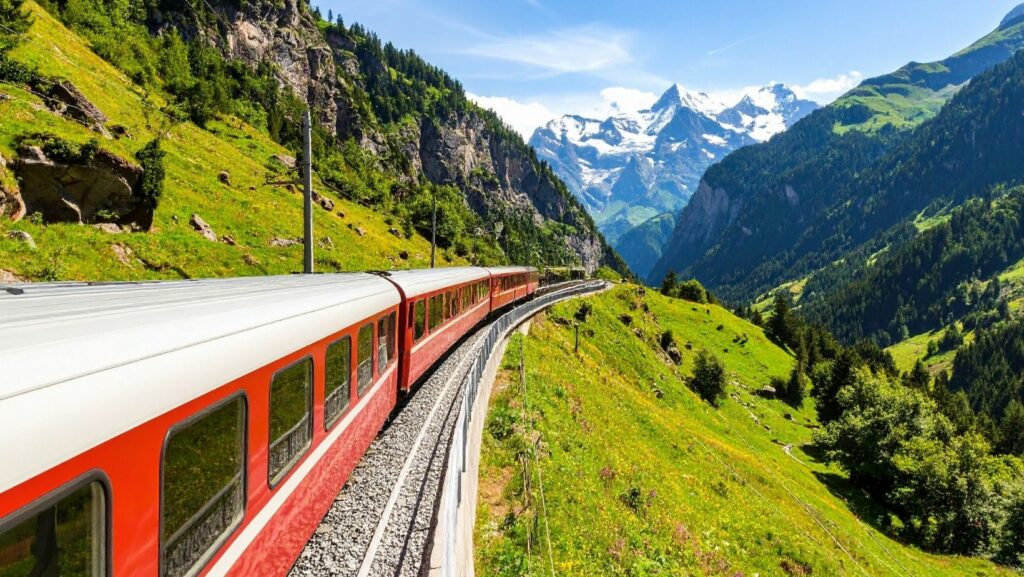
The Alps are one of Europe’s treasured territories, a region carved and reshaped over millions of years spanning a delicate ecosystem and even more precarious balance. When one travels in the Alps, one travels across an expansive, beautiful ecosystem and, for as many villages visited or mountaintop pictures taken, an area simultaneously harboring local villages, flora and fauna, and intricate, balanced ecosystems. Thus, responsible travel in the Alps should never render the traveler feeling as though they’ve been shortchanged on a good time, but instead, bolstered in their contributions to preservation for such a natural wonder to a region so vast to benefit anyone and everyone who comes after them.
Nurturing the local ecosystem means understanding what mountain territory can transform into under human guidance and adapting accordingly. These seemingly minor but incredibly beneficial adjustments in perception and exacerbated by the average three million visitors per year could impact change. Thus, responsible travel in the Alps feels like a sense of gratitude and acknowledgment to the territory. If someone comes prepared with an open heart, mind, respectful attitude, and empathetic disposition, the experience is tenfold better.
Understanding the Fragility of the Alpine Ecosystem
Despite their tough exteriors, the Alps are incredibly fragile. They take a long time to recover. For example, alpine plants grow at a slow pace with harsh conditions and short growing seasons, so when vegetation is impacted, it takes years to recover. Transportation from DIA to Breckenridge is often referenced in discussions about responsible mountain travel, underscoring how access and human movement can significantly affect delicate high-altitude environments. Soil erosion is everywhere, with the steepness of the terrains leading certain impacted areas to become permanently inaccessible.
Animals are highly conditioned and acclimated to specific environments and require quiet regions, migration paths, and secure nesting areas for feeding, reproducing, and resting. When humans disrupt these patterns albeit unintentionally it can hinder their effectiveness in acquiring their necessary resources. However, if travelers understand how sensitive the ecosystem is, they will work harder to traverse the area in an effort that even the smallest step can make a huge difference.
Sticking to the Path While Hiking in the Alps
One of the easiest responsible tourism principles within the areas is sticking to the path. Paths are established for a reason and while it may be tempting to go off designated areas to be up close and personal with a specific feature or component, it only makes for detrimental impact to the entire ecosystem.
Paths are designed in a way that caters to human desire to explore but minimizes impact on the most fragile areas in proximity to their positions. Going off the path is ultimately moot as foot traffic creates damage over time regardless of where anyone steps. Paths may place people in precarious situations, but the pros of staying on paths protect the fragile areas more than those who venture off the paths.
Humans will benefit from knowing where to walk so as not to get lost; nature will benefit from knowing that travelers will not disturb otherwise hidden animal habitats.
Respecting Wildlife and Quiet Zones
Wildlife is abundant in the Alps and requires calm predictability to thrive. Stressors from noise or closeness or quick movements can agitate sensitive wildlife and create negative responses from humans treading through their territory.
Travelers need to acknowledge wildlife and not engage in behaviors that render their experience moot or even threaten the lives of these animals. Thus, quiet zones exist predominately for breeding animals and those preparing for winter with energy conservation needs. Travelers need to respect these zones to ensure endangered species can thrive regardless of human interference in their existence.
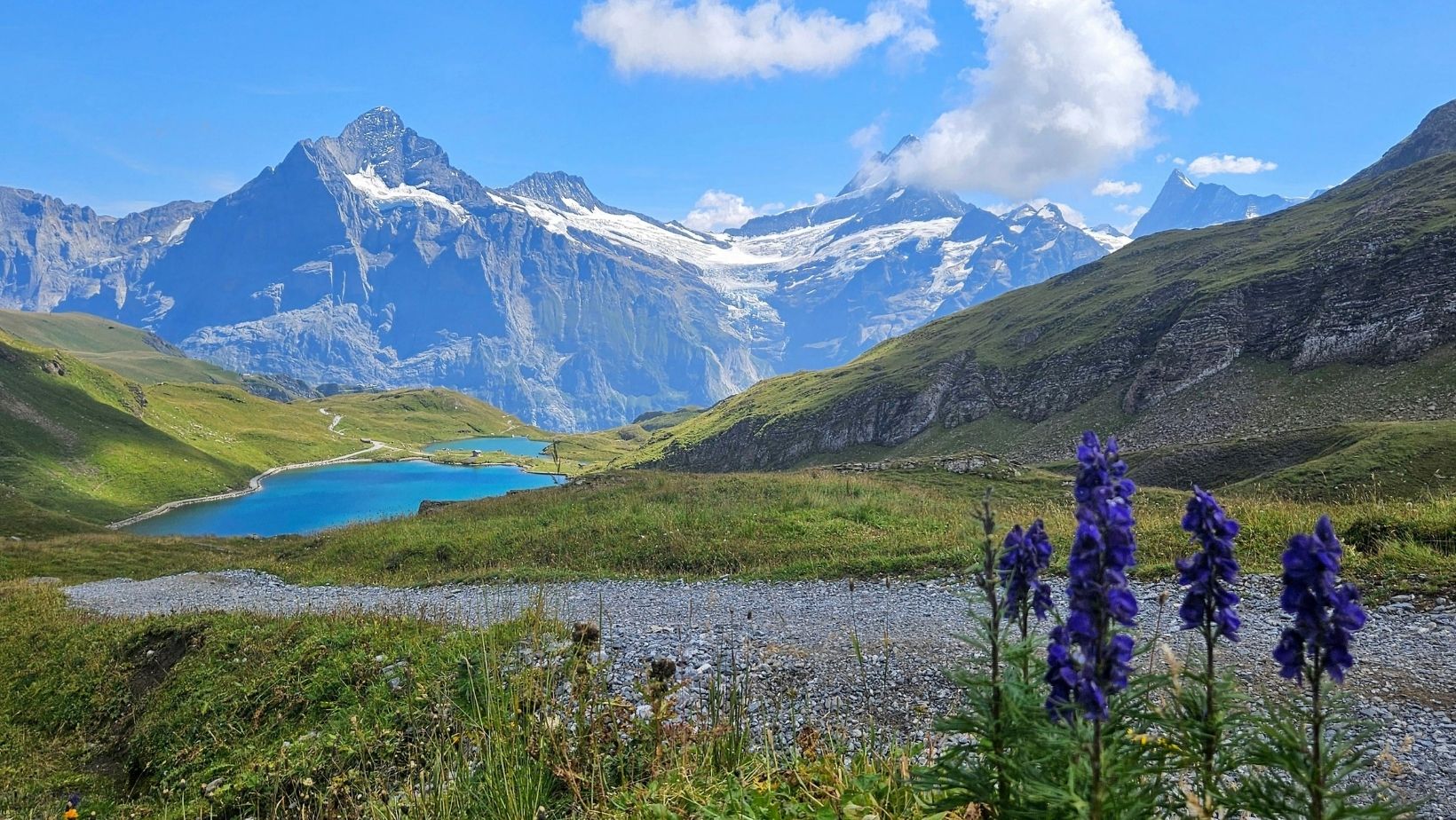
Travelers can watch animals without disturbing them; binoculars or simple distance will allow all parties to exist in their shared space without determining who properly belongs there.
Proper Waste Management and Leave No Trace
Waste management is something to consider on any alpine excursion. Much of the Alps is remote, and without guarantees of where trash will go, what’s left behind will stay behind for decades to come. Even things that are relatively biodegradable (read: food scraps) will shift animal eating habits and subsequent meals.
Thus, everything that goes up must come down no matter how small so no garbage sullies the picturesque view and small animals aren’t eating things they shouldn’t be eating because nosy travelers thought it was too big a burden to bring back down. But leave no trace means no trace with an impression that others do not know you were there. Instead, the area should be left as it was found so others can appreciate it just as much and have the sense of an untouched wilderness.
Respect Water/Sources Lakes of the Alps
Water sources of the Alps are some of the cleanest in Europe. Many of the lakes and springs are on travel routes and are the access for those creatures and humans who live there, and thus drinking access is limited. Therefore, respect of water sources means respect of cleanliness and public health.
Water can be respected by not making it dirty, by tainting it, being loud and unnecessary near tributaries or banks, and creating unnecessary commotion which would taint precipitation patterns. Small movements create big ripple effects within fragile ecosystems, and those who call the Alps home realize it to be a life-giving phenomenon not just a beautiful backdrop.
Respect Local Communities and Support Sustainable Efforts
Responsible travel in the Alps goes beyond the nature there are villages of inhabitants who rely upon sustainable efforts of tourism to live; without responsible travel, respectful efforts to traditions, culture and economic viability, the inhabitants would have little to no future.
For example, supporting businesses which have local ownership means that the profit stays closer to home than if an outsider came in and ran the show. When accommodations, food and activities are run by those who live off the land, there is a better chance of successful survival with traditions more easily blended with the geography than any outside force. Travelers must recognize that human efforts are meshed with natural systems, and supporting one helps the other.
Leaving the Alps Better Than You Found It
Stewardship is what responsible travel is all about. One cannot give a natural ecosystem what was subtracted, but one can carve out a lessened negative impact and increased facilitation through humane giving. Leaving the Alps better than you found it may be comprised of small, incremental decisions, but cumulatively they add a lot.
If travelers treat the Alps as if it’s their own (and not part of a temporary beautiful feel) then they become stalwart stewards with nature instead of passive beneficiaries. It’s a transaction instead of a one-sided venture. The transference occurs beyond the boundaries of the trip for travelers have so much respect that they actually take the Alps with them and the Alps give even more than it originally had to give.
Responsible Travel Means Responsible Travel Transportation
Your means of travel transportation will determine your impact on the environment and community. Mountain valleys are susceptible to patterns, sounds and emissions from travel because air flow isn’t always free and ecosystems are condensed. For example, in an urban city, there are more pollutants than a mountain-surrounded quiet town but the opposite is true regionally (more people = more pollution/horns/traffic).
Responsible travel means providing yourself with a transportation means that avoids traffic. For one, avoiding traffic is a good generalized rule. But at elevations/in valleys, the more contained, the better. However, responsible travel begins to contextualize how you’ve gotten to where you’ve gotten by providing a facilitated, more powerful experience. When people aren’t rushing through regions, the changes of landscapes occur as noted objects of curiosity instead of geographical annoyances. One can appreciate how towns function with geographical momentum instead of geographical haste when they aren’t rushing by at 75 MPH. Responsible travel appreciates sustainable travel but champions a way to sensibly travel in the mountains.
Respect Grazing Areas/Agricultural Land
Much of what people consider beautiful about the Alps is cultivated from years of mountain agriculture. Meadows, pastures grazing fields thousands of feet up are not necessarily wild areas in their most wild states, but agricultural workspaces where locals find new ways of living and integrative opportunities. Therefore, walking where one isn’t supposed to walk in through fences, pathways or moving gates is crucial when there, in their working/discovering spaces.
People like to saunter through meadows or fail to acknowledge signs regarding livestock grazing times. But distressing livestock feeling they have the right to wade through grassy emerald plains causes undue anxiety and disruption to a life force that otherwise cultivated itself. Responsible travelers understand that these spaces are integrated, cultivated by man and nature alike they’re no longer necessarily natural. Respecting these fields preserves historically-based land use techniques that effectively combine tourist and local ventures.
Limiting Travel Impact to Vulnerable Locations
Parts of the Alps are over-traveled. If someone makes it to the Alps, they’ve likely heard of Zermatt, Lake Annecy, or other postcard pictures. But it’s that accessible or pitched in front of them by travel agents that it’s not hard to realize how awe-inspiring these places are. But when the springs, trails, and towns are too packed with tourists and lest it be not mentioned litter, tread and deterioration and it’s apparent that people tour at others’ expense, responsible travel means knowing where efforts can be maximally effective and what parts are too sensitive for anything more.
Thus, by avoiding highly traveled places or traveling during off-seasons, the impact can be evenly spread throughout the region to allow the smaller, more sensitive areas of the Alps to maintain themselves. For now, at least. Thus, by limiting efforts accumulated through travel and traveler urges, people become champions of sustainability and preservation in the victorious experiential focus on the most recognizable areas and scenery of the Alps.
Contesting the Notion Traveling to the Alps Once is a Lifetime as Responsible Travelers
Traveling to the Alps as a part of responsible travel does not have to be a once-in-a-lifetime experience. Responsible travelers cultivate mindsets as to how their travel impact can facilitate benefit/harm of the region and the inhabitants/nature. Therefore, when awareness is raised and applied through what’s packed up with travelers and what travelers do on the trails and in towns, responsible travel is not dependent upon what inhabitants think from a ONE travel experience.
Instead, when so many are offered the opportunity to go but so few travel there with the respect they could have over time within one trip with an educated mindset for multiple trips there means that those who are flexible will be most beneficial. Those who can return home transformed by responsible travel in the Alps to apply that transformation to their next trip and trips after that are those who are successful because it’s clear the responsible mindset feels second nature in places that deserve the kind of mindset conducive to transformation. The Alps are special enough to provide a transformed individual self-promising potential long after travel has ended.